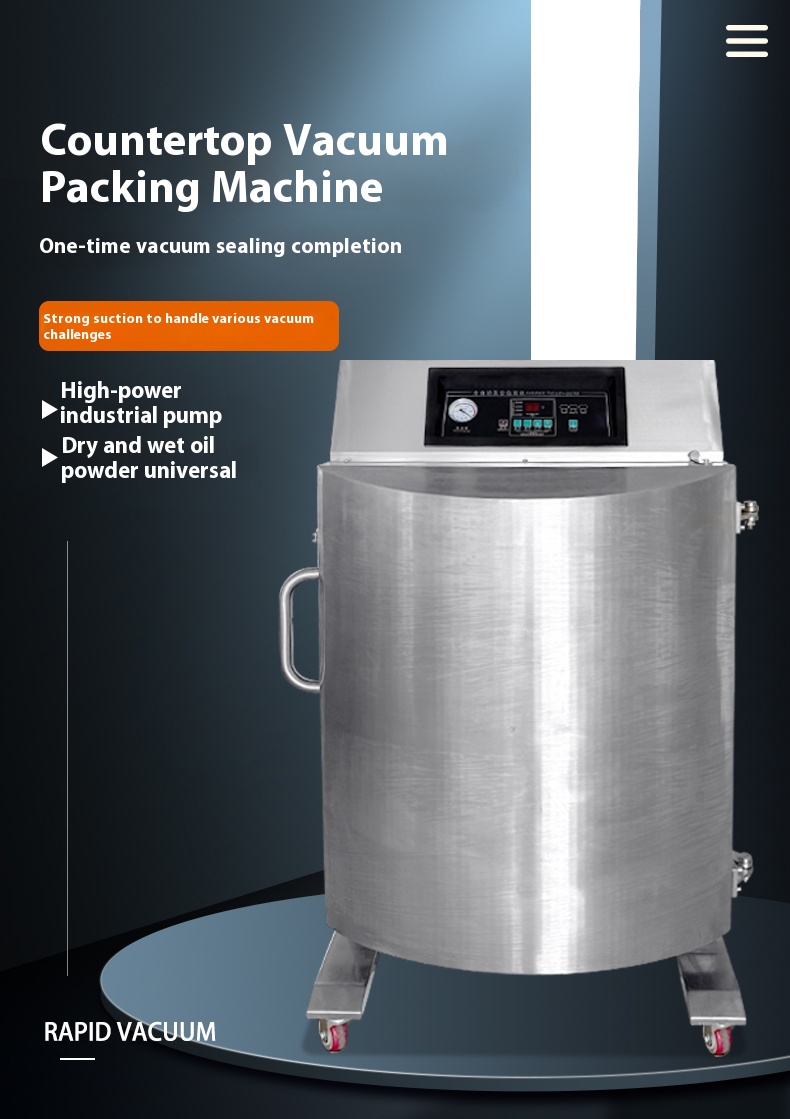
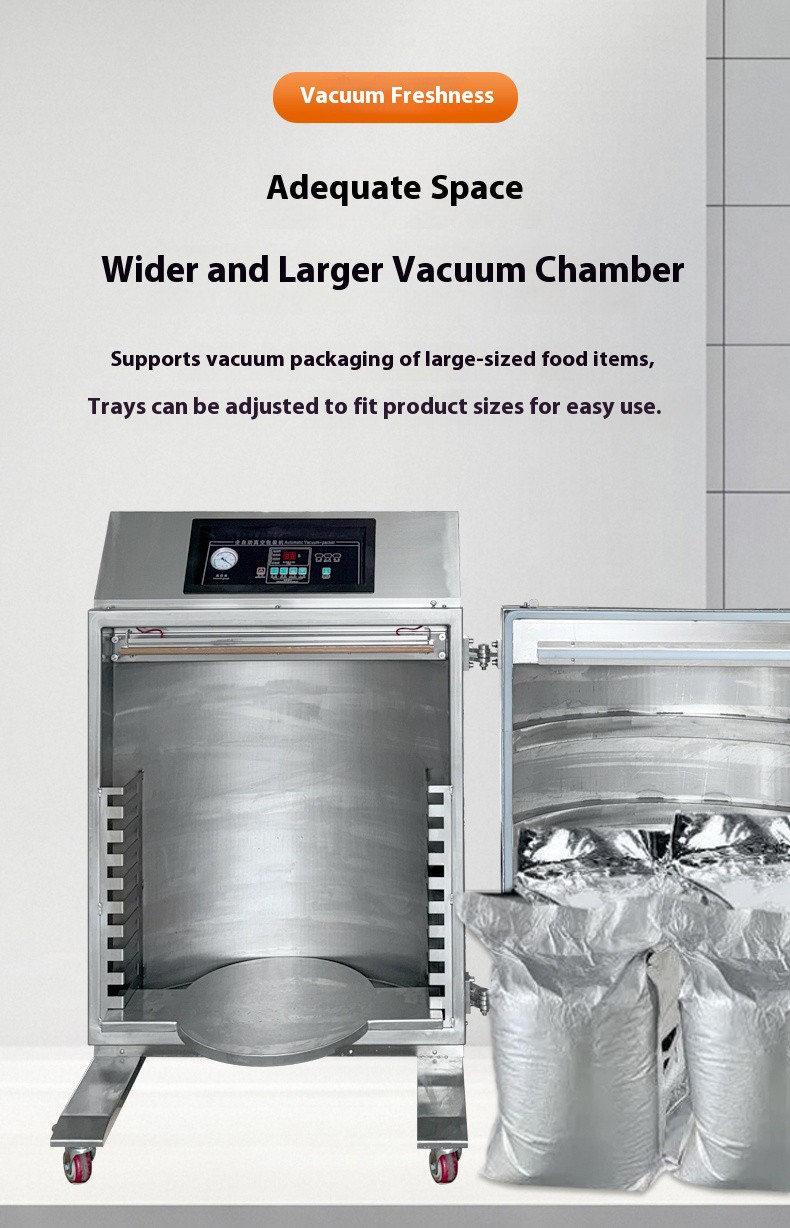
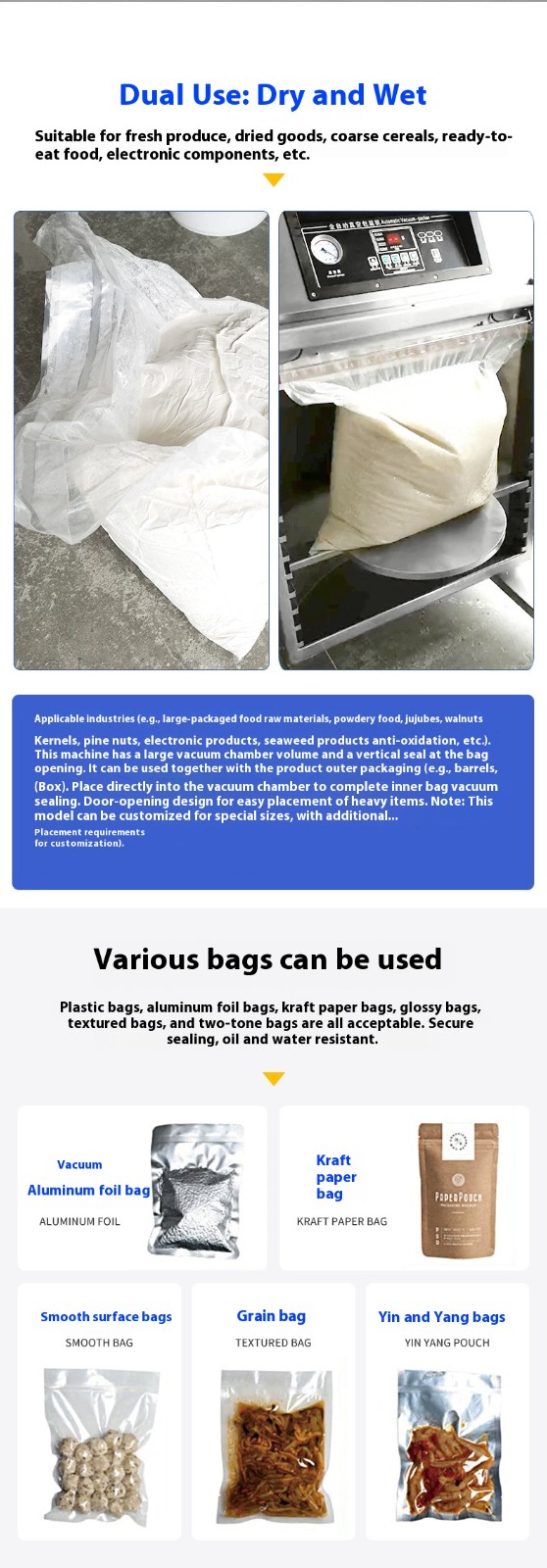
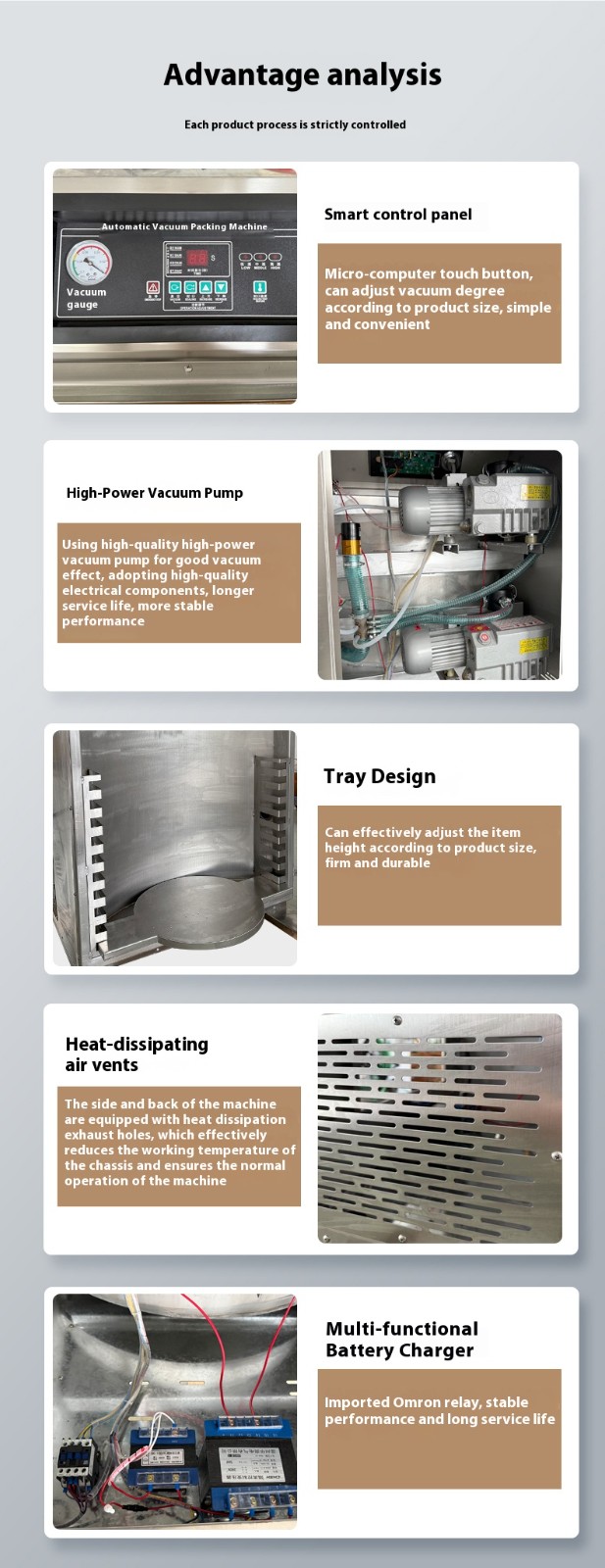
The core goals of daily maintenance and care for vertical cabinet vacuum packing machines are to prolong the equipment's service life, ensure stable vacuum degree, and avoid sealing failures. Maintenance should focus on the four core modules: "vacuum system, sealing system, mechanical structure, and electrical system". Specific techniques can be divided into three categories: daily inspection, regular maintenance, and special maintenance.
- Check the vacuum pump oil level: The oil level must be between the "MIN" (minimum) and "MAX" (maximum) marks on the oil gauge, and the oil should be clear. If the oil turns turbid, black, or contains impurities, it must be replaced immediately to avoid wear on the pump body.
- Inspect the airtightness of the vacuum pump and pipelines: Before starting the machine, check if the vacuum pipeline joints (such as rubber sealing rings and clamps) are loose or damaged. Air leakage will lead to a decrease in vacuum degree (manifested as air remaining in the bag after packaging).
- Clean the sealing strip: After each use, wipe the surface of the sealing strip with a dry cloth (operate after the temperature drops to room temperature to avoid scalding) to remove residual plastic slag and food residues. Accumulated residues will cause uneven sealing and leakage.
- Check the sealing silicone strip: Observe if the silicone strip is deformed, cracked, or sunken. If the silicone strip is aged, it will cause uneven pressure during sealing and needs to be replaced in a timely manner. It is recommended to keep 1-2 spare silicone strips to avoid machine downtime.
- Check the vacuum chamber door and sealing ring: Observe if the door sealing ring (mostly made of rubber) is detached or damaged. Aged sealing rings will cause air leakage in the vacuum chamber. Ensure the door is tightly closed and latched without looseness or jamming when closing.
- Clean the interior of the vacuum chamber: After each use, wipe the inner wall of the vacuum chamber with a damp cloth to remove residual materials (especially liquid and powder materials) and prevent corrosion of the inner wall or blockage of the exhaust hole.
- Check the power cord and plug: Inspect if the power cord is damaged or aged, and if the plug connections are secure to avoid short circuits or electric leakage.
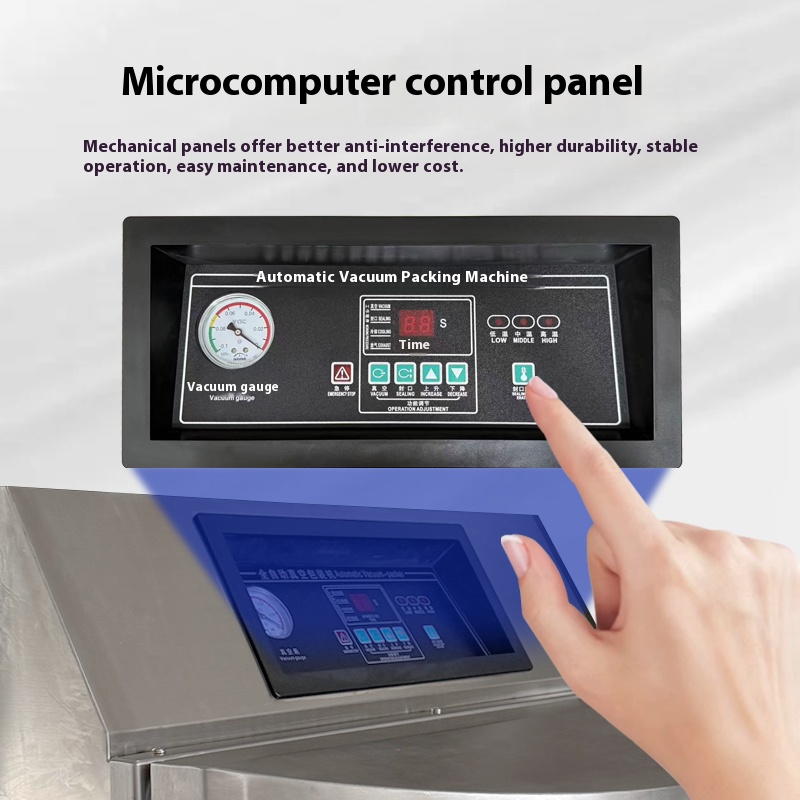
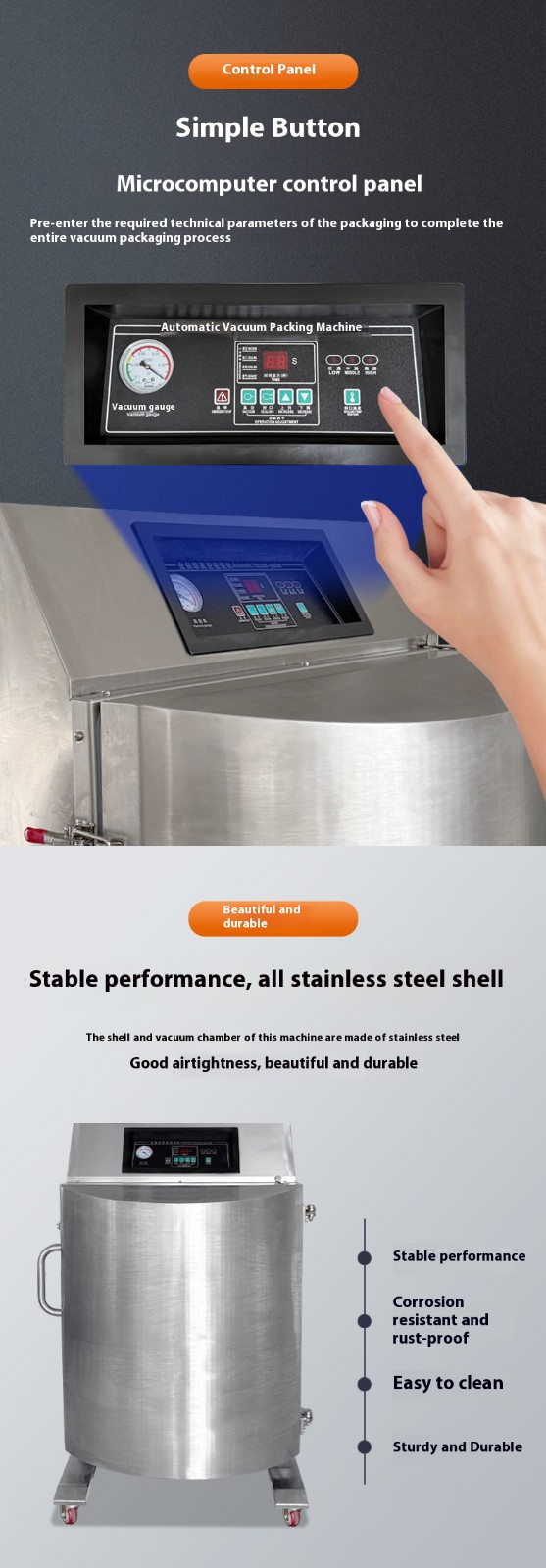
- Verify the indicator lights on the control panel: After starting the machine, check if the power light, vacuum light, and sealing light are on normally. If the indicator lights are abnormal (e.g., flickering or not turning on), stop the machine to check the circuit and do not force operation.
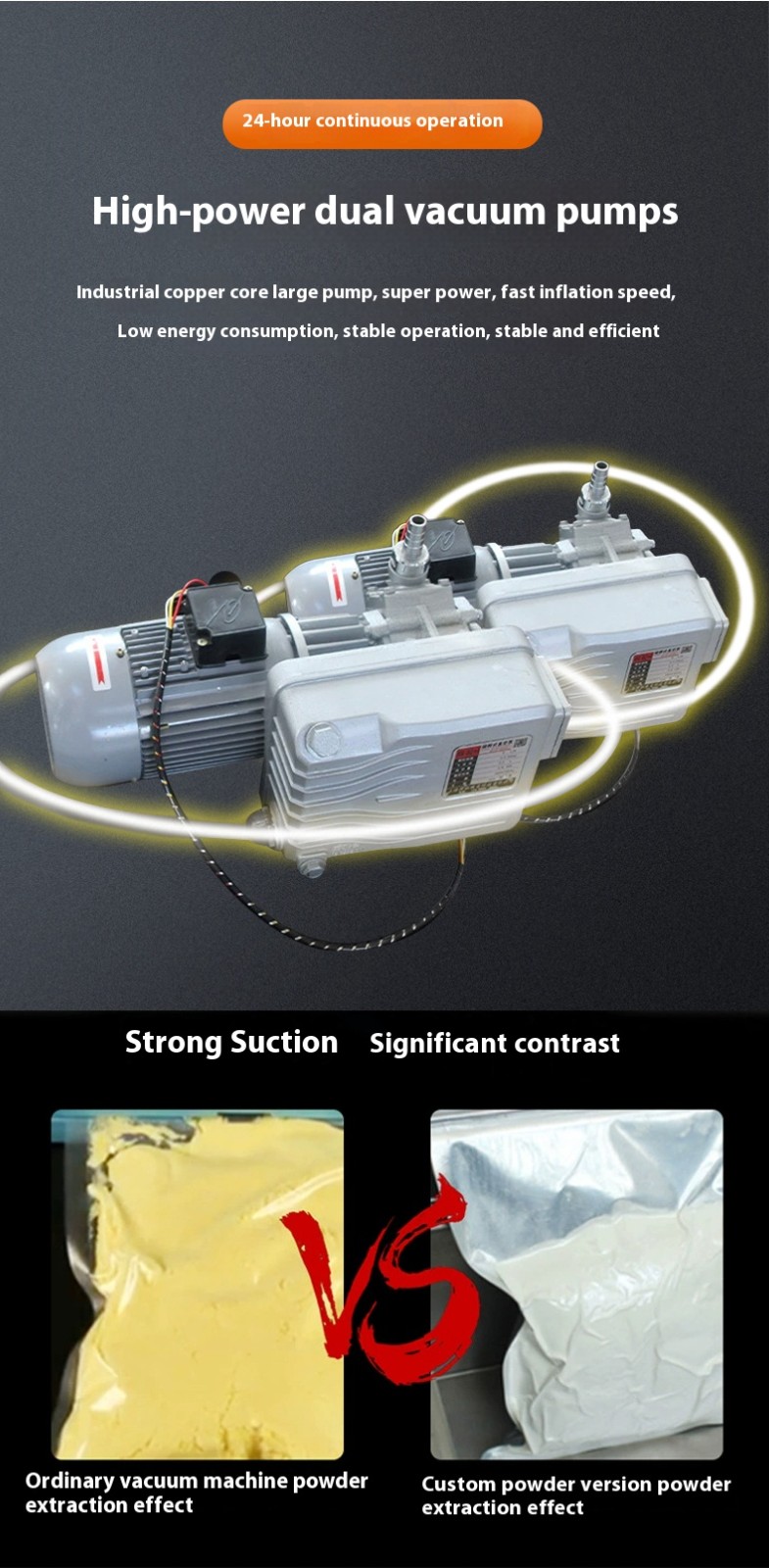
- Clean the vacuum pump filter element: Remove the filter element (mostly paper or metal mesh) at the air inlet of the vacuum pump, and blow it clean in the reverse direction with compressed air (or rinse with water and dry it; paper filter elements cannot be washed with water) to remove dust and impurities. A blocked filter element will slow down the vacuuming speed.
- Lubricate moving parts: Apply a small amount of food-grade lubricating oil to the hinges, latches, and other moving parts of the vacuum chamber door (avoid using industrial lubricating oil to prevent food contamination) to reduce wear caused by mechanical friction.
- Oil change for oil-type vacuum pumps: Change the oil for the first time after the new machine has been used for 100 hours, and then change it every 500-800 hours (or judge based on oil quality). When changing the oil, stop the machine to let it cool down, drain all the old oil, and add vacuum pump oil of the same model (do not mix oils of different brands or models to avoid pump failure).
- Inspect the sealing transformer and heating tube: Use a multimeter to measure the output voltage of the sealing transformer (which should comply with the equipment parameters, such as 220V or 380V), and check if the heating tube is short-circuited or open-circuited. A damaged heating tube will result in insufficient sealing temperature and failure to seal.
- Calibrate the vacuum degree: Use a vacuum gauge to detect the actual vacuum degree of the vacuum chamber (which should be consistent with the set value of the equipment; for example, food packaging usually requires a vacuum degree of -0.09~-0.1MPa). If the vacuum degree is not up to standard, check the vacuum pump, pipeline airtightness, or replace the vacuum pump carbon sheet (worn carbon sheets will reduce the vacuuming capacity).
If leakage occurs when packaging liquids (such as sauces) or fine powders (such as flour), stop the machine immediately:
- Absorb the liquid in the vacuum chamber with a dry cloth, then wipe the inner wall with a neutral detergent (such as diluted dish soap) to prevent the liquid from corroding the metal or seeping into electrical components.
- If powder enters the vacuum pump, disassemble the pump body for cleaning (or contact professionals to avoid damage caused by self-disassembly).
- Thoroughly clean the inside and outside of the equipment, and apply a small amount of anti-rust oil to the inner wall of the vacuum chamber to prevent rusting due to moisture.
- Drain the engine oil in the vacuum pump (to prevent oil deterioration and blockage of the oil circuit), and refill with new oil before using it next time.
- Turn off the main power supply, cover the equipment with a dust cover, and place it in a dry and well-ventilated environment (to prevent moisture from damaging the circuit).
- Insufficient vacuum degree: Prioritize checking if the door sealing ring is damaged, if the vacuum pump oil is deteriorated, or if the pipeline is leaking.
- Unreliable sealing: Check if the sealing temperature is too low (adjust according to the packaging bag material; for example, composite films require a higher temperature), if the silicone strip is aged, or if the sealing time is too short.
- Inability to close the door: Check if the door hinge is jammed, if the latch is misaligned, and clean the impurities at the contact point between the door and the vacuum chamber.