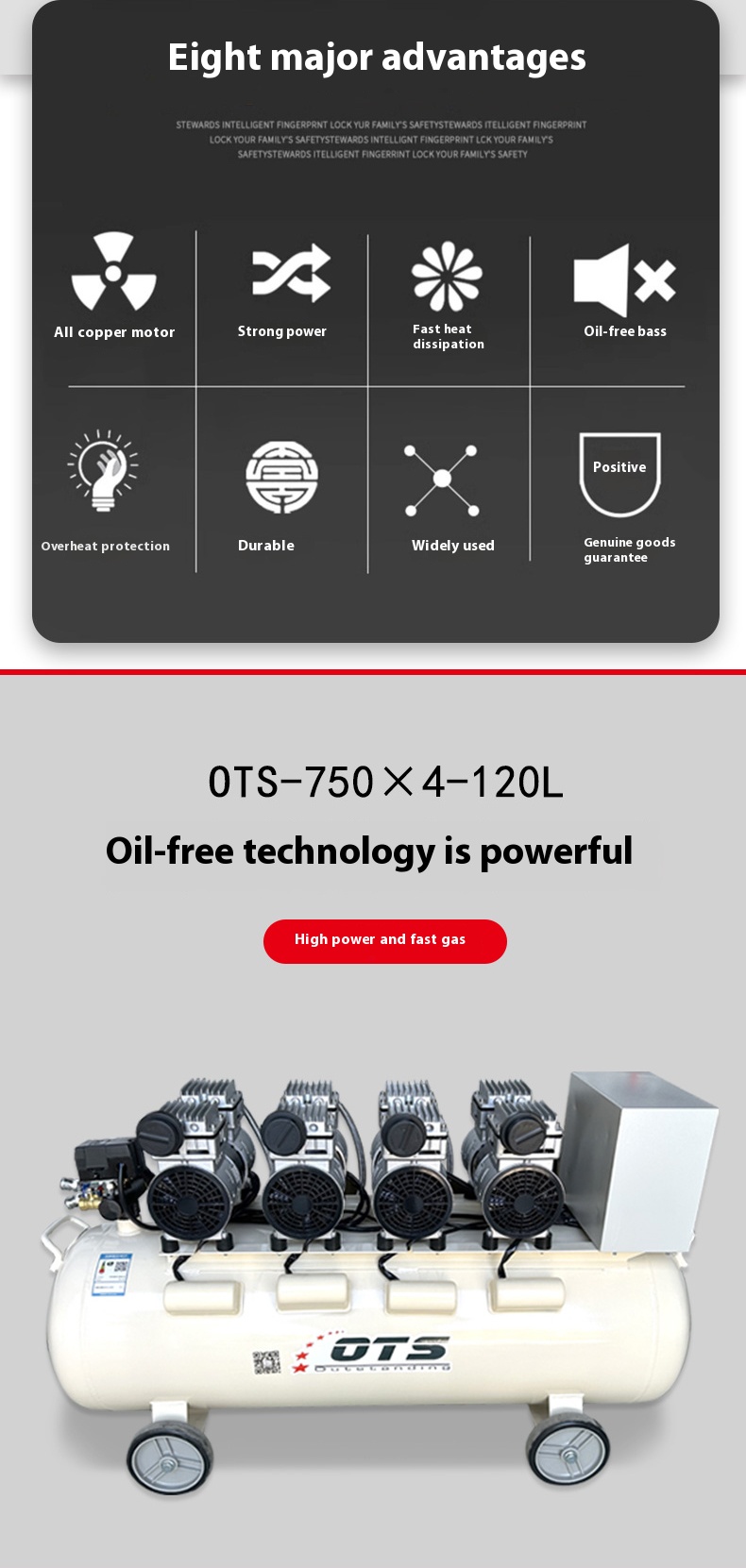
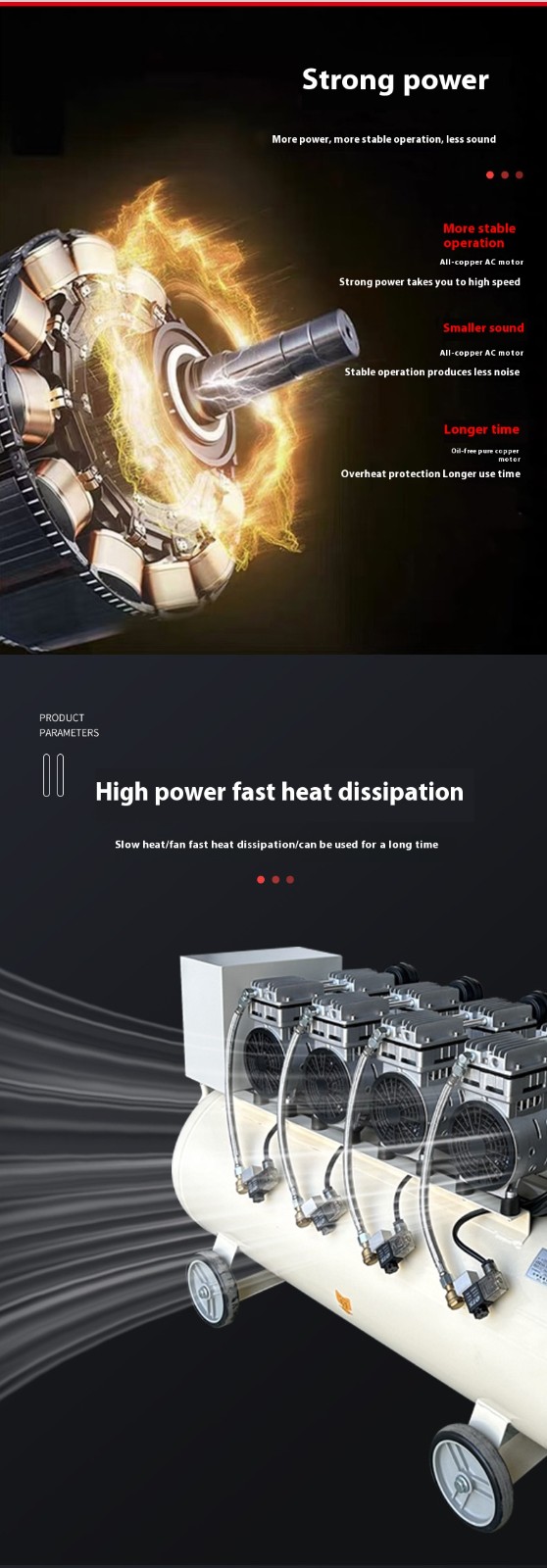
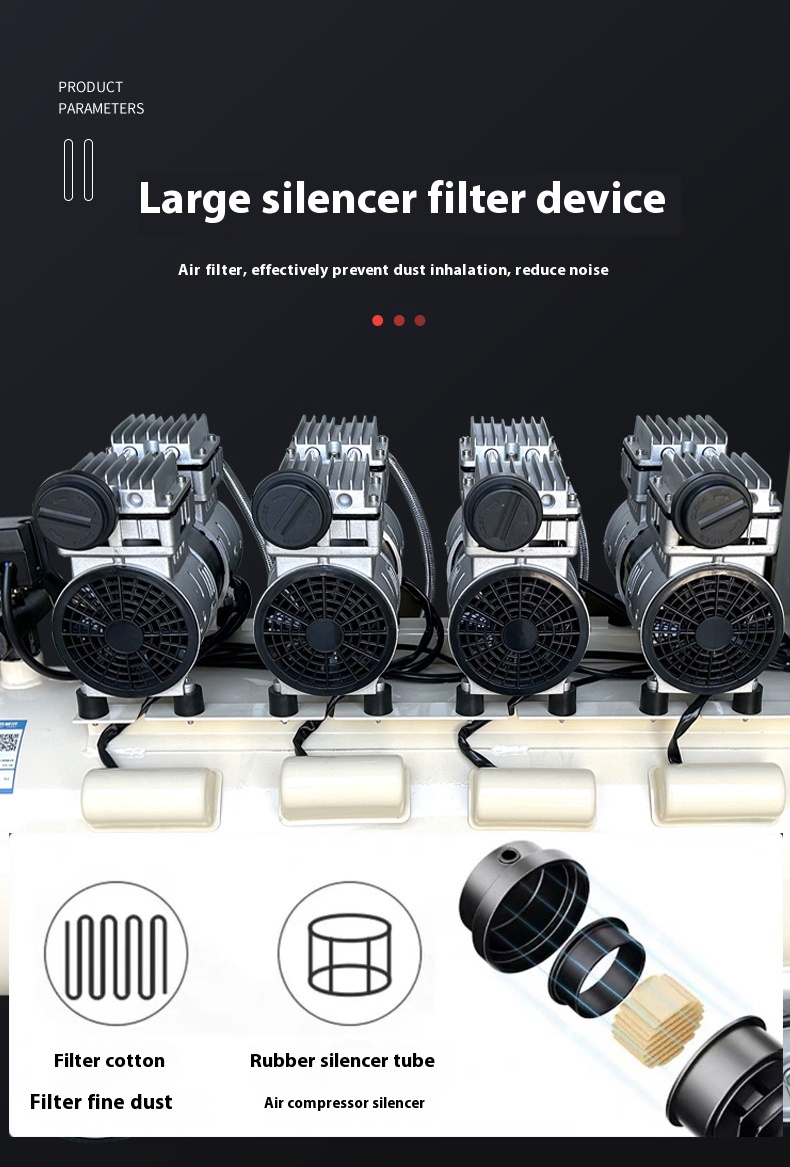
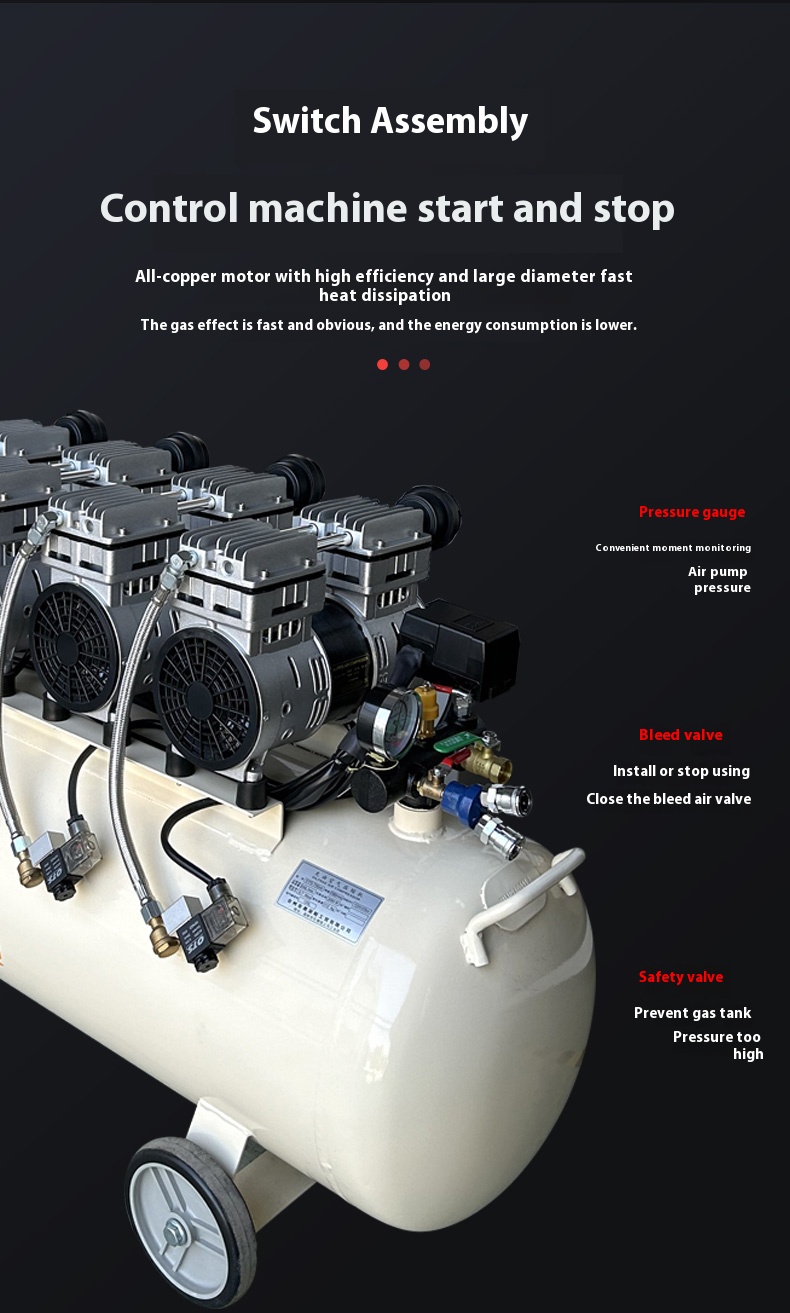
There are three main types of oil-free air compressors: piston, screw and centrifugal, with different working principles as follows:
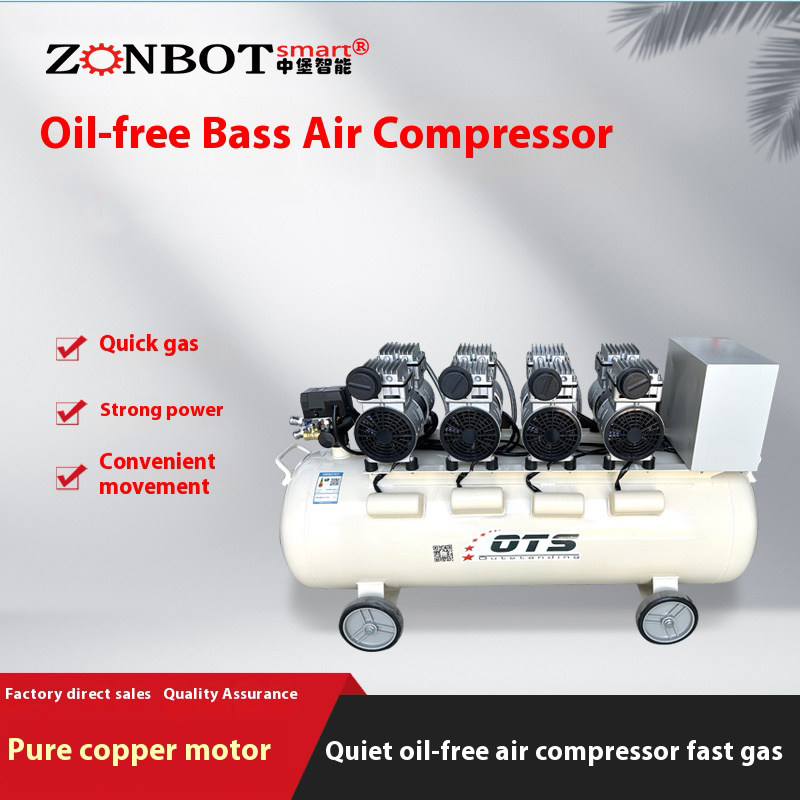
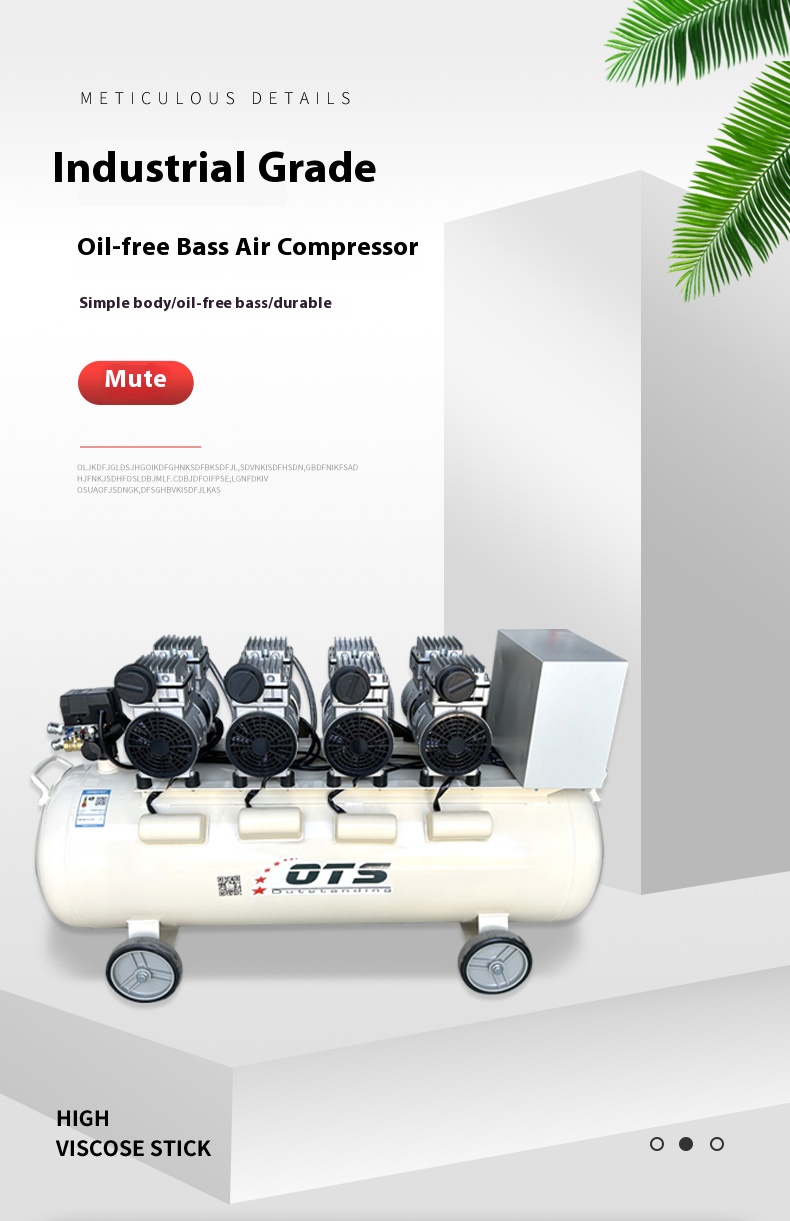
Piston Oil-Free Air Compressor
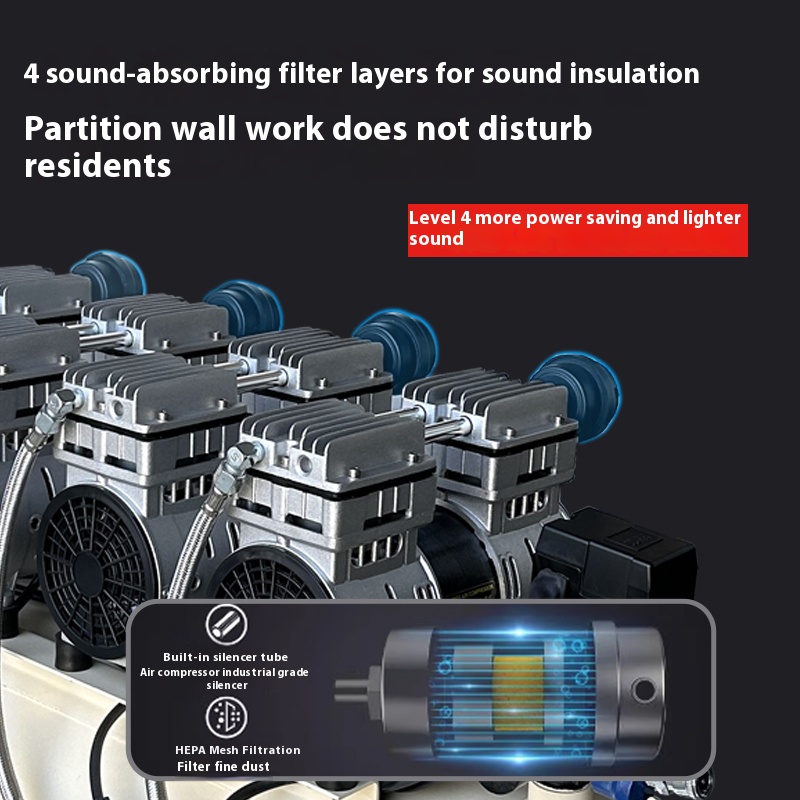
Suction Process: When the piston moves downward, the cylinder volume increases and the pressure inside drops below the inlet pressure. The inlet valve opens, and air enters the cylinder under pressure difference.
Compression Process: The piston moves upward, reducing the cylinder volume and compressing the air to raise pressure. Special piston rings and cylinder materials (such as PTFE and other self-lubricating materials) provide good sealing and lubrication between the piston and cylinder, ensuring smooth compression without lubricating oil.
Discharge Process: When the air pressure inside the cylinder reaches or exceeds the discharge pressure, the exhaust valve opens, and compressed air exits the cylinder into the air receiver or downstream equipment.
Screw Oil-Free Air Compressor
Suction Process: A pair of intermeshing screw rotors rotate inside the casing. As rotor grooves connect with the inlet, air is drawn into the groove space under atmospheric pressure and gradually drawn into the compressor as the rotors turn.
Compression Process: As rotors continue rotating, air in the grooves is trapped between the rotors and casing. The inter-tooth volume gradually decreases, compressing the air and increasing pressure. The screw rotor surfaces are specially treated for high wear resistance and sealing. Driven by synchronous gears, rotors avoid direct contact, achieving oil-free compression.
Discharge Process: When the inter-tooth volume reduces to a set level and compressed air reaches discharge pressure, the compressed air is discharged through the exhaust port into the downstream system.
Centrifugal Oil-Free Air Compressor
Suction Process: Air enters the compressor through the inlet and is drawn in by the high-speed rotating impeller. Blades on the impeller give air radial velocity and kinetic energy, and air flows toward the impeller outer edge under centrifugal force.
Compression Process: After leaving the impeller, air enters the diffuser, where air velocity gradually decreases, kinetic energy converts into pressure energy, and air pressure rises. Centrifugal compressors often use series-connected multi-stage impellers and diffusers to achieve a high compression ratio.
Discharge Process: After multi-stage compression, air reaches the required pressure and is discharged through the exhaust port to equipment or systems needing compressed air. Centrifugal compressors use non-contact bearings such as air bearings or magnetic suspension bearings between the impeller and casing, requiring no lubricating oil for lubrication or cooling, ensuring oil-free compressed air quality.